

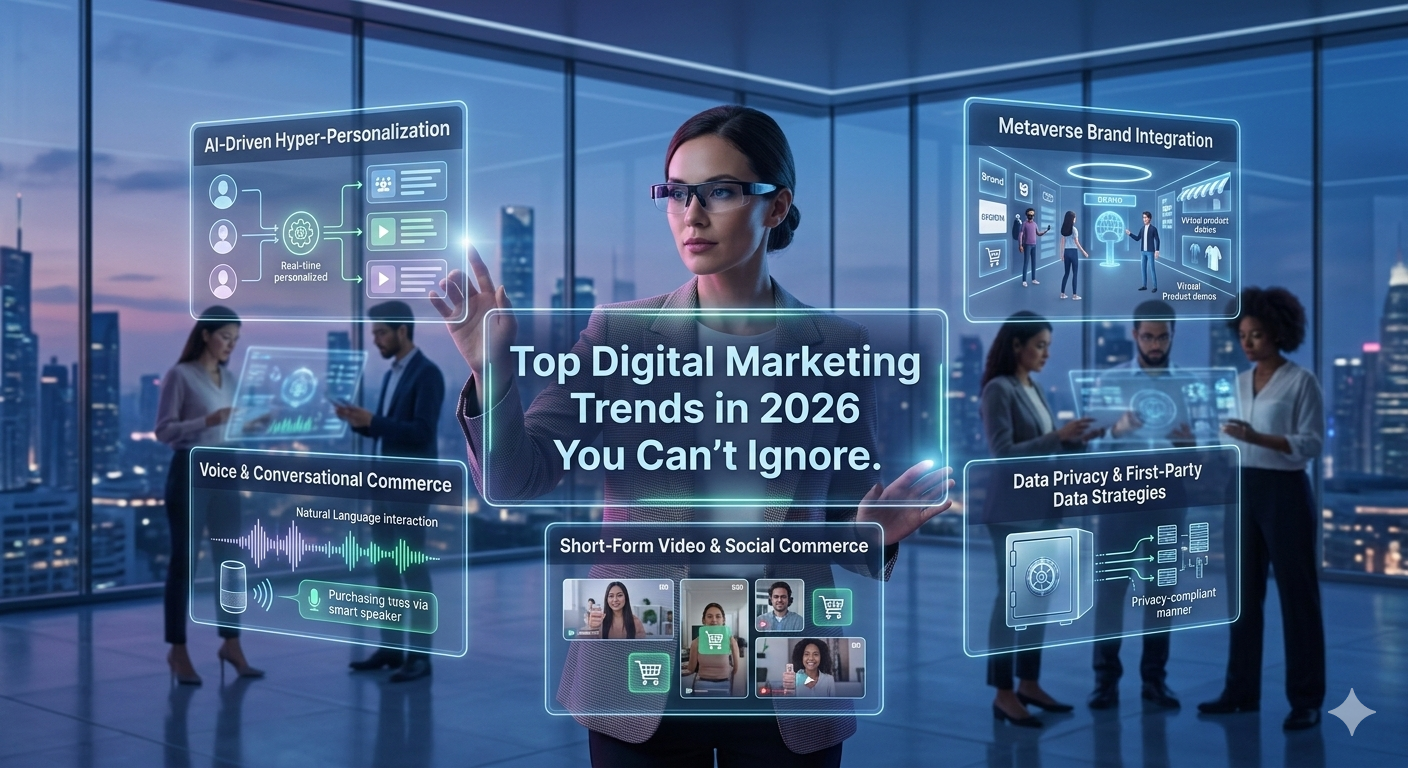

Digital marketing in 2026 isn’t just about doing more digital it’s about doing more with intelligence, empathy, and strategy. As technology advances and consumer behavior evolves, brands must adapt quickly to remain relevant, visible, and engaging. The digital landscape now requires marketers to rethink every aspect of how they attract, engage, convert, and retain customers.
In this article, we explore the top digital marketing trends in 2026 and discuss why they matter, how they’re reshaping the marketing ecosystem, and what strategies you can adopt to stay ahead of the curve.
Artificial Intelligence (AI) Is Everywhere and It’s Smarter Than Ever
AI is no longer optional. In 2026, it powers campaign creation, optimization, personalization, and analytics. Marketers use AI for content generation, predictive analytics, automated ad optimization, and customer behavior forecasting. The key is combining human creativity with AI efficiency to achieve better results.
Search Is Evolving Goodbye Keywords, Hello Conversations
Search has become conversational and AI-driven. Users now type full questions, and AI-generated summaries often appear before traditional website links. Businesses must optimize for answer-based search by structuring content clearly, adding FAQs, and providing direct responses.
Voice and visual search are also growing, making it important to optimize images, metadata, and conversational content.
Hyper-Personalization Becomes the Standard
Customers expect highly personalized experiences. Brands now use predictive personalization to tailor emails, ads, and landing pages in real time. Personalization goes beyond using a first name it anticipates customer needs and delivers relevant content instantly.
Short-Form Video Continues to Dominate
Short-form video remains one of the strongest engagement tools in 2026. Quick, visually engaging clips capture attention fast and drive higher interaction rates. Brands use short videos for tutorials, demos, testimonials, and storytelling.
The key is grabbing attention within the first few seconds.
Social Commerce Turns Platforms into Marketplaces
Social platforms now function as shopping ecosystems. Customers can discover, review, and purchase products without leaving the app. This seamless buying experience reduces friction and increases conversions.
Live shopping, influencer promotions, and in-app checkout are powerful drivers of revenue.
Authenticity and Human Content Matter More
Despite AI growth, audiences still value authenticity. Real stories, honest messaging, and transparent communication build trust. User-generated content and behind-the-scenes insights help brands feel more human and relatable.
The Rise of Micro- and Nano-Influencers
Influencer marketing continues to grow, but brands are shifting toward smaller creators with highly engaged audiences. Micro- and nano-influencers often generate better engagement and stronger trust than celebrity endorsements.
Customer Communities Drive Organic Growth
Building communities is more powerful than building audiences. Brands are creating interactive groups and forums where customers can connect and share experiences. Communities strengthen loyalty and turn customers into advocates.
Interactive and Immersive Experiences Keep Audiences Engaged
Interactive content like augmented reality, 3D previews, quizzes, and live shopping creates memorable experiences. These immersive strategies help customers make confident purchase decisions.
Data Privacy and First-Party Data Strategies Are Essential
With stricter privacy regulations, brands must rely on first-party data. Collecting information directly from customers through subscriptions and loyalty programs builds trust and ensures compliance.
Transparency in data usage is critical.
Personal Branding Outperforms Corporate Logos
People connect more with individuals than logos. Founders, CEOs, and team members who share insights and expertise build credibility and humanize their brands.
Cross-Channel Integration Creates Seamless Experiences
Customers interact with brands across multiple platforms. Successful marketers integrate email, social media, search, and advertising into a unified strategy to provide a consistent experience.
Micro-Moments and Real-Time Marketing
Consumers make fast decisions. Capturing micro-moments requires delivering relevant content at exactly the right time. Real-time marketing tools allow brands to respond quickly to trends and user behavior.
Sustainability and Ethical Marketing Gain Importance
Consumers increasingly care about sustainability and ethics. Brands that communicate genuine social responsibility and environmental awareness build long-term loyalty.
Predictive Analytics Enhances Customer Journeys
Predictive analytics allows marketers to anticipate customer behavior, identify high-intent buyers, and prevent churn. This data-driven approach improves campaign performance and overall ROI.
Conclusion
Digital marketing in 2026 blends advanced technology with human connection. AI drives efficiency, personalization increases relevance, and authenticity builds trust. Brands that combine innovation with empathy will lead the future.
If you want, I can also optimize this with SEO meta description and focus keywords for your website.
